
We’ve never thought of ourselves as an edtech company. To us, learning was never about clicks or manufactured engagement. That put us off to the side over the years. But we’ve always tried to be useful along the way.
We’ve always wanted to foster reflection. Even moreso, we wanted to help everyone be more effective. To get out of their minds in order to learn, adapt and respond to reality.
While we were doing that, a larger shift was underway. One we haven’t been able to affect much yet.
Participation in learning is collapsing.
K–12 teachers report plummeting levels. Teacher preparation programs strain under growing classroom management challenges. University value propositions erode as shortcuts replace mastery.
In response, schools turned to screens to prop up outcomes. But instead of reversing the trend, screen-based learning too often reinforces it. Engagement in screens would seem to be a misleading indicator.
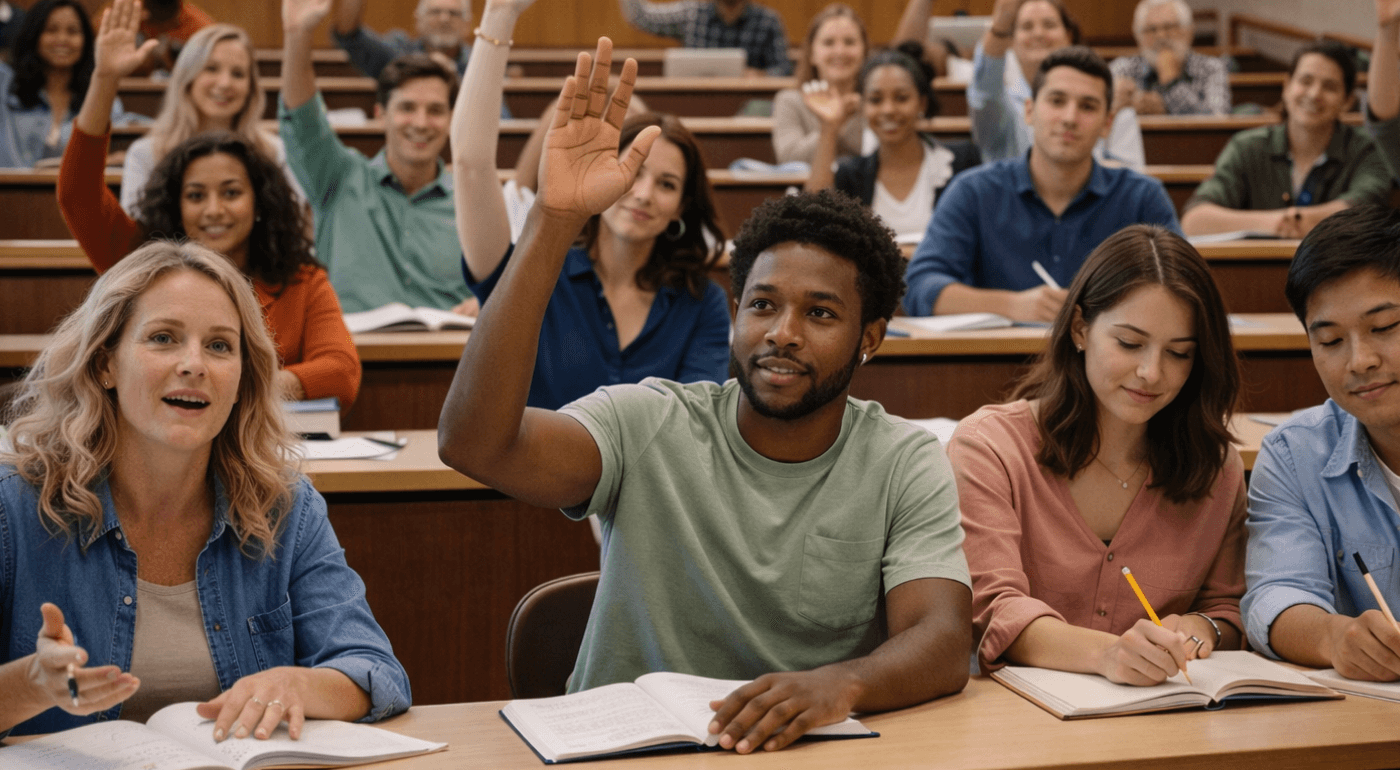
High-participation classrooms already show us what makes the difference. The best teacher moves are participation moves. High-quality instructional materials work in part because they demand thinking, persistence, dialogue, and presence.
These classrooms can match or exceed screen-based outcomes. But they also produce something screens can’t. The ability to participate in real learning.
Yet schools that pull back from screens face a new problem. A generation of teachers that was never trained to run low-screen, high-participation classrooms. And with modern learners, the skill required is more sophisticated than ever.
We can’t wait the 10-20 years that it takes for today’s methods of training teachers. Reality is shifting too fast. Schools need help now. Kids need help now.
So our focus is shifting towards technology for participation. Technology that trains teachers on how to handle the hardest part of modern teaching. Technology that makes high participation a daily practice, immediately, in every classroom.
And we’re realizing that perhaps this is an even more effective way to foster reflection and improve how schools operate.
This goes beyond just education too.
Children aren’t just failing to participate in school. Measures of human health, wellness, and flourishing are all falling. Children, and adults, it would seem are opting out of reality.
Ubiquitous screen-based personalization is the obvious culprit. It builds capacity, with a dependence that the experience adapts to you. And it brings a sense of mastery people crave, but without the discomfort reality so often brings.
Reality does not adapt to you. It demands that you adapt, and that you find ways to be creative within its constraints.
Participation is what builds the capacity to adapt when reality does not.
Yes, participation trophies were dumb. But real participation isn’t just some performative thing. You’ll never solve problems, create knowledge and even make good choices for yourself without it.
And while parents do want their kids to love school as screen-based learning advocates suggest. No parent wants to raise dependent children. No parent wants an AI standing in for relationships, purpose, or agency. They want their kids to be able to participate in reality itself. They want mastery in reality.
High-participation classrooms are one of the few places this capacity can still be built. Reliably. At scale. And kids can learn to love them too.
It’s time for everyone to stop opting out. Let’s not lose our ability to participate in reality.