

We built M2 with a feedback focus on engagement, questioning, and pacing. Why? Because insights in these three areas make a difference for every teacher we know.
Many districts have also adopted their own high-quality instructional frameworks and initiatives. Turning those priorities into consistent, scalable classroom support, though, is challenging.
This is where M2 can help.
Introducing Rubric Builder
Rubric Builder is a new tool that lets administrators customize the criteria used in M2’s feedback during activities and in teacher reports afterward. With it, schools can add their own scoring criteria to sit alongside M2’s built-in Engagement, Pacing, and Questioning rubrics.
Unlike traditional rubrics that live in documents or observation tools, these criteria shape what M2 looks for, responds to, and reports on during and after instruction every single day. This means the feedback teachers receive through M2 can now be fully aligned to district priorities, instructional frameworks, or coaching goals. Teachers get more meaningful insights, and administrators get consistency across classrooms.
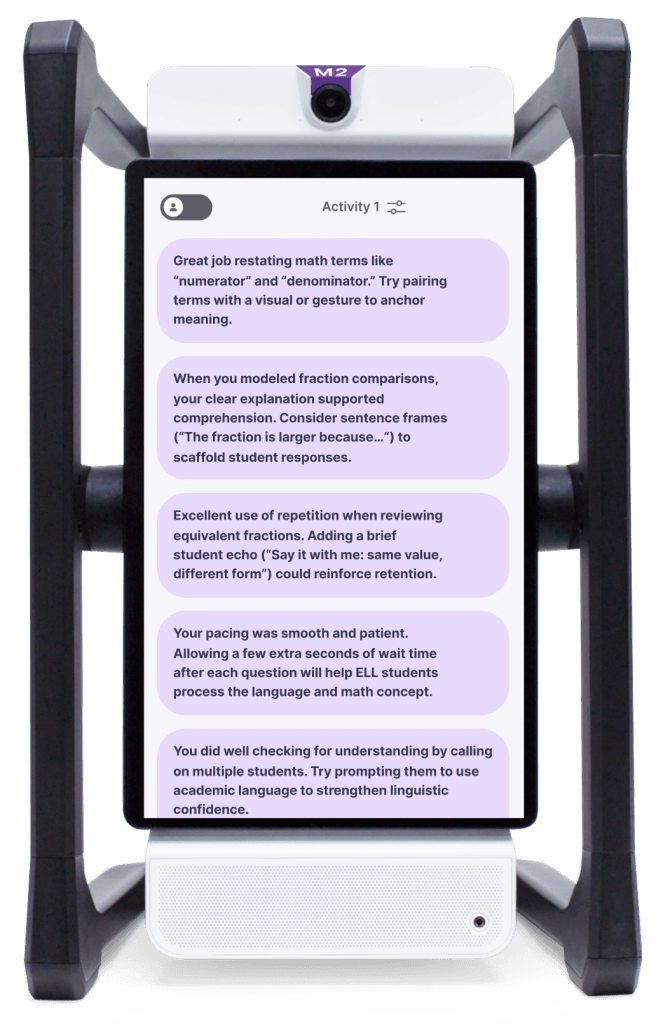
Because initiatives shift and frameworks get updated, Rubric Builder supports the need for flexible instructional leadership. Admins can toggle custom criteria on or off at any time, and changes apply only to future activities, ensuring that all past feedback is preserved.
What does this all look like in practice? Here are three ways Rubric Builder can support your organization.
Align to teacher evaluation frameworks
Whether your district uses Danielson, Marzano, CLASS, or a local district models, M2 can now take on the same perspective as your organization’s coaches or administrators. After customizing your rubric, M2 will spot and comment on the detailed look-fors related to rigor, differentiation, classroom environment, or academic discourse that are part of your preferred approach to evaluating instruction.
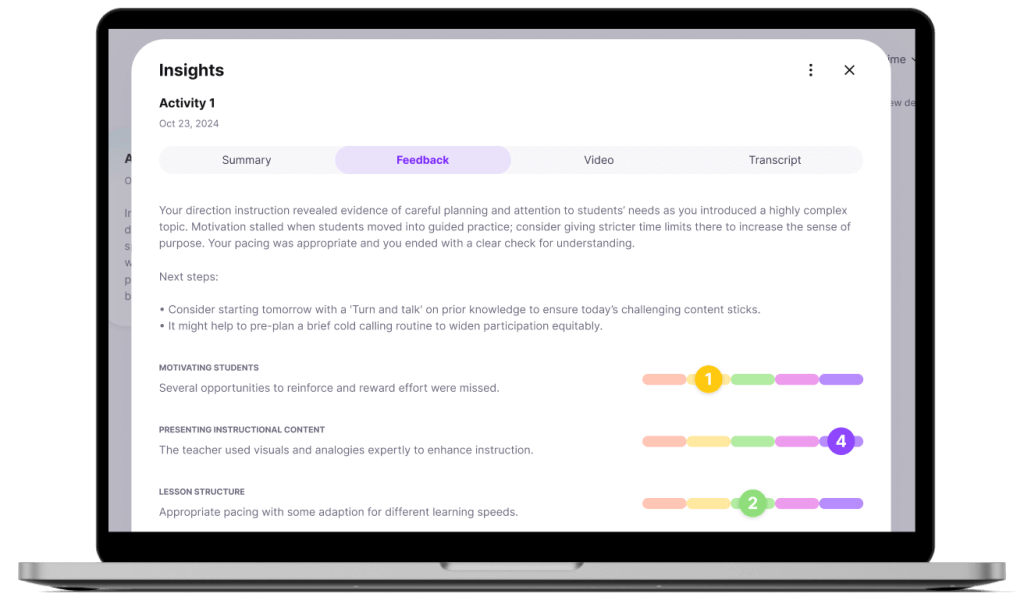
For example, if your framework emphasizes academic language development, you can add a criterion like “Use of Academic Vocabulary.” When a teacher starts an activity, M2 scores and provides feedback using that criterion, and even appropriately mirrors the language used in your rubric.
Teachers get more frequent, more targeted insights, while administrators gain more consistent data. This moves the evaluation from a one-off event to a year-long support plan.
Support instructional coaching programs
With large teacher rosters and staffing constraints, coaches can only visit a fraction of their teachers each month. Coaches can extend their impact when teachers use M2 weekly or even daily.
By bringing coaching criteria into Rubric Builder, districts can:
- Reinforce the same language coaches use
- Give teachers immediate feedback tied to the strategies they’re working on
- Support new teachers or teachers in new roles with higher-frequency feedback
Imagine a team focusing on improving questioning techniques. A coach can add a criterion like “Use of Higher-Order Questions” to the organization’s rubric. Each time a teacher uses M2, they receive a score and written feedback tied to that goal without waiting for the next coaching visit. This helps coaching criteria show up consistently in practice, not just during scheduled observations.
It’s a simple way to extend a coach’s impact across classrooms.
Advance district initiatives with consistent feedback
M2 is now your partner in championing district initiatives, ensuring that momentum stays high by massively increasing feedback teachers see on practical implementation of your organizations’ areas of focus.
Because M2 provides feedback in real time, teachers receive many more touch points to reinforce the initiative each day instead of just on PD days.
Imagine rolling out an initiative knowing that teachers have not only heard about your organization’s new priority from leadership but will get daily reminders, feedback, and coaching about what that priority looks like in practice with every lesson they teach. That vision is now a reality.
This is especially valuable for new teachers or those adapting to new district priorities. M2 helps them know exactly what to look for and how to improve.
A more aligned future for instructional feedback
When teachers receive feedback aligned to their team’s goals, growth accelerates. Coaching conversations become clearer and are grounded in shared context. Expectations stay consistent even when you don’t have the chance to meet. Important initiatives have a greater chance of taking root for the long term.
By embedding rubric criteria directly into live observation and post-class feedback, M2 helps existing frameworks influence daily teaching at a scale that was never possible until now.
Rubric Builder brings alignment between organizational priorities and the daily rhythm of teaching. It’s another step toward a future where every classroom gets the support it deserves, and every teacher has a clearer path forward.